Occasional musings, Geistesblitze, photos, drawings etc. by a "resident alien", who has landed on American soil from a far-away planet called "Germany".
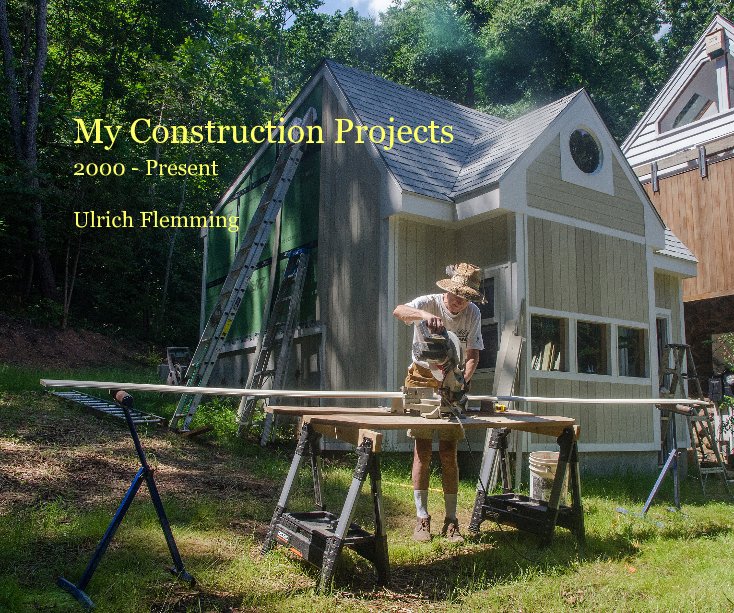
I describe, with photos, drawings and text, the various construction projects I undertook on our house after my retirement in do-it-yourself fashion. Along the way, I attempt to convey a sense of "how architects think".
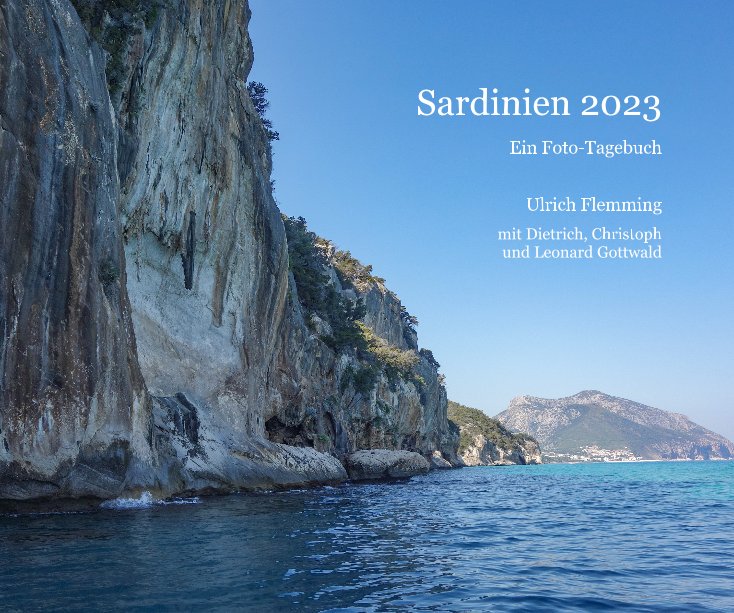
My first trip after the pandemic! The text is in German, but the narrative is easy to understand, and the (sometimes spectacular) pictures should speak for themselves anyway.
Die Villanelle ist eine ungemein anspruchsvolle Gedichtform: 6 Strophen mit dem Reimschema ABA ABA ABA ABA ABA ABAA (d.h. es gibt nur zwei Reime), wobei die erste und dritte Zeile der ersten Strophe abwechselnd die nächsten 4 Strophen beenden und zusammen die letzten beiden Zeilen der letzten Strophe bilden. Der unermüdlich wiederholte Reim und die immer wiederkehrenden Zeilen haben einen fast hypnotischen Effekt—sie schaffen einen Gedankenkreis, aus dem es keinen Ausweg zu geben scheint.
Eine Villanelle zu schreiben, die nicht gekünstelt klingt, ist eine Herausforderung. Der hab ich mich gestellt, allerdings in einem eher humorvollen Zusammenhang, als Hommage für Ror Wolf, den von mir sehr geschätzten Stammvater des deutschen Fußballgedichts.
I am watching the German Bundesliga on ESPN+.
The commentators are typically fluent in German and do not hesitate to insert German terms into their remarks, when they cannot think of an equivalent word in English or when they want to add some local color (or simply show off).
Some of these terms are common words used metaphorically. But most of them have been coined specifically for the soccer context. Whatever their origin, they tend to be very expressive, and I started a collection (click on the link below).
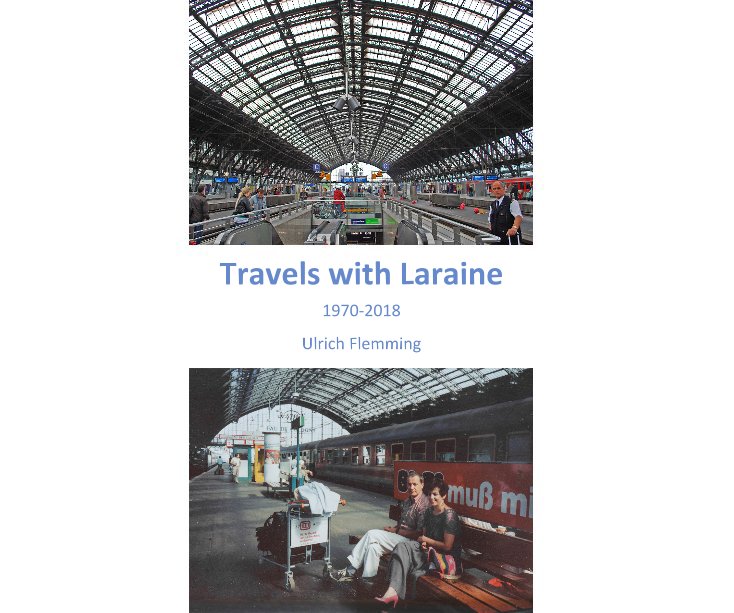
A photo album showing selected images taken during trips my wife, Laraine, and I made to countries in the Americas, Europe, Africa, and Asia. The travel photos are interspersed with pictures we took of each other or taken of us by others. The subtext is to show how two people grow old together.
For the first time, I'm introducing a WoM that does not appear in the Duden, the official dictionary of the German language—it's an invention of mine, triggered by the life my wife and I have been living during the current pandemic. The term is formed after Einsiedler, the German word for a hermit, which consists of the components ein (one) and Siedler (settler): It's a "one-settler", a person living by himself in almost complete isolation. Einsiedlerin is the female form.
Now, zwei is the German word for "two", and a Zweisiedler denotes a person who lives with another person in almost complete isolation, and that's what I have become over the last year and a half. My wife is the corresponding Zweisiedlerin.
Our contacts with other people have been reduced to the absolute minimum—doctors, sales staff, repair people, and the occasional visit with a friend, no longer masked because everybody, and I really mean everybody, among our acquaintances has been fully vaccinated. Of course, the relative isolation of our house, on its 3.5 acres of land and surrounded by woods and, closer by, a garden needing a lot of attention, encourages this kind of life. But the funny thing is, we like it—we feel the world at large is in such a sorry state that retreating from it is an obvious choice (if one can afford it), and that's what we have in common with the original hermits when they chose to live all by themselves in the desert or on a mountain top.
Addendum (9/15/2021): My friend Thomas Kreifelts sent me this e-mail (m.t.): Yes, really very nice. The meaning becomes immediately obvious after months of the pandemic.
But as far as the priority of word creation is concerned, I have to pour a little water into your wine, because "Zweisiedler" is already an entry in the Grimms' dictionary [by the famous Grimm brothers—U.F.] (vol. XVI 1954) with Jean Paul, Nietzsche and Peter Rosegger given as sources, all 19th century:
Zweisiedler.
I liked Rosegger best.
The meaning these authors assign to the term is somewhat different in each case (and from mine), but each of them apparently took delight in forming a tongue-in-cheek analogy to an established term, and since at least two of them are considered masters of German prose, I am not at all saddened by the fact that I can no longer consider myself the inventor of the word—rather, I am flattered by finding myself in such distinguished company, and I'm grateful that Thom pointed this out to me.
"One thing could be said about Ulrich with certainty: He loved mathematics because of the people who could not stand it." (Robert Musil, The Man Without Properties, m.t.)




 Posts
Posts


